
Giovanni Segantini: An Essay in Psychoanalysis
Karl Abraham, 1877–1925
The first attempt anywhere to read the whole life and work of a painter through psychoanalysis — and the seed of the clinical theory of melancholia.
AI the Classics publishes fresh translations of out-of-copyright texts, together with interactive exhibits that map and analyse them — each one drafted by machine and ruled on by a human hand.

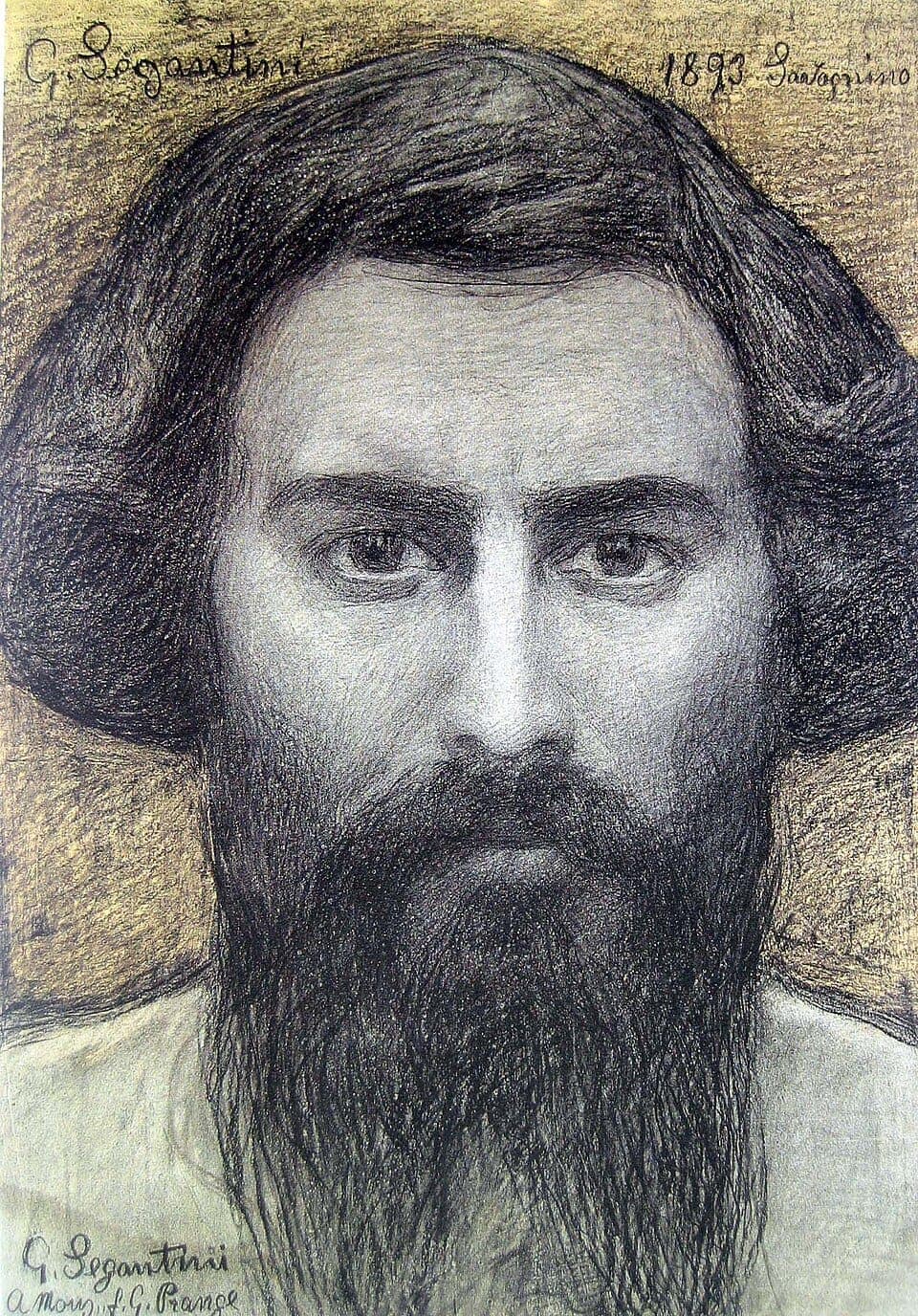
Giovanni Segantini, Self-Portrait, 1893
Automatic translation is fast and fluent and, left alone, quietly wrong. Our texts pair the reach of a model with the ruling of a translator, and keep the argument visible on the page.
A language model produces two machine layers: a strict word-for-word translation and a grammatical reading that resolves the syntax into ordinary sentences.
Weighing both drafts — and, where they exist, earlier public-domain translations of the same text — a human settles on the smooth English and is answerable for it.
Nothing is hidden. Glossaries, translators’ notes, and the reasoning behind each choice travel with the text, so the reader can see the seams.
Karl Abraham, 1877–1925 · translated from the German by Fable 5 & Thom Jenkins
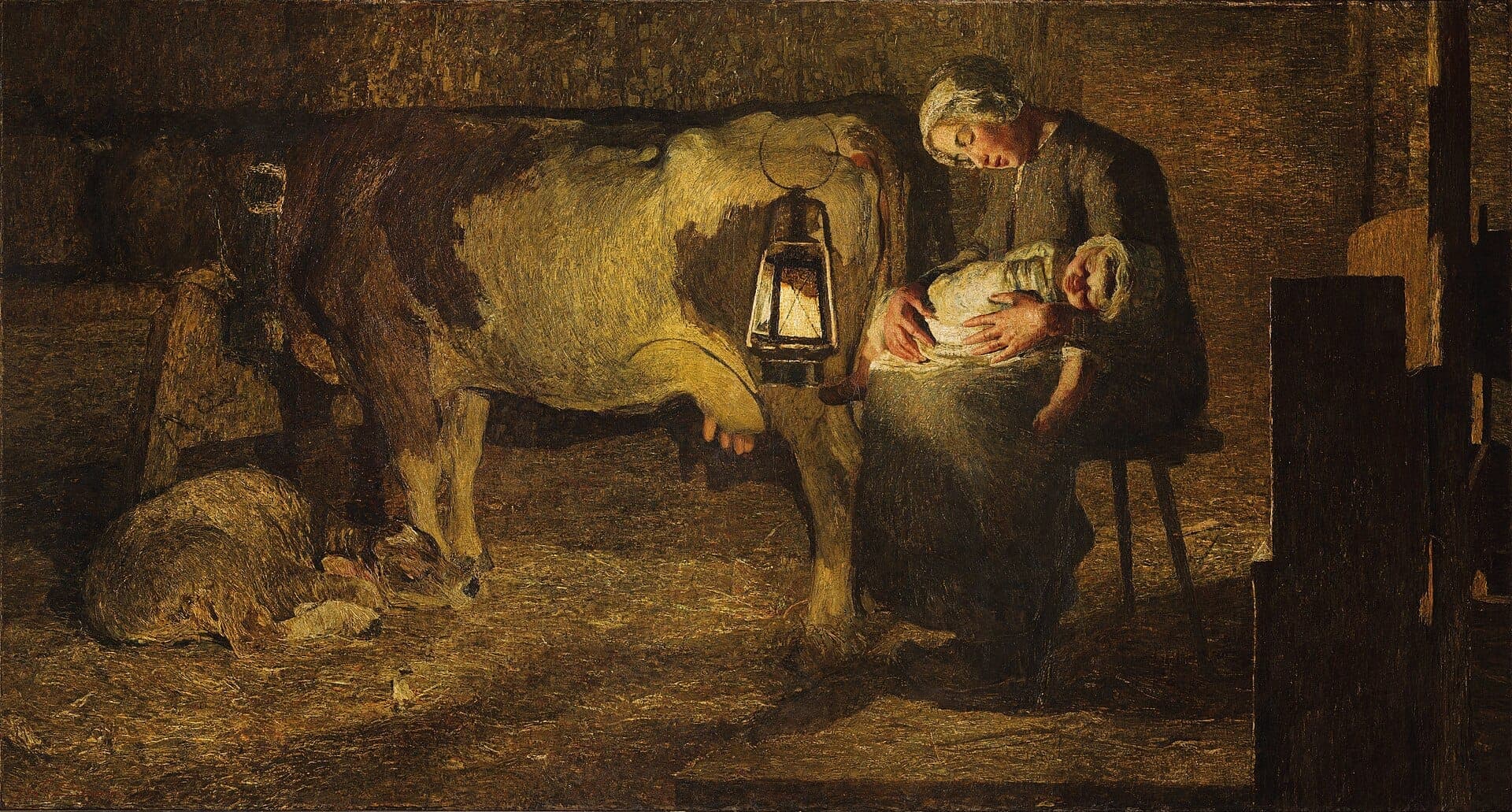
Published in Freud’s own series a year after the Leonardo study, Abraham’s essay reads the entire oeuvre of the Alpine painter Giovanni Segantini through the drives of childhood. This translation returns to the German of 1911 and to the vocabulary Abraham actually used: drives rather than instincts, the soul rather than the mind, the pleasure of looking rather than scopophilia.

Karl Abraham, 1877–1925
The first attempt anywhere to read the whole life and work of a painter through psychoanalysis — and the seed of the clinical theory of melancholia.
Leo Tolstoy, 1828–1910
Tolstoy’s secret last diary, hidden in his boot. Read it clean, or open “the page” to see his own deletions and the blots left by his wife’s hand.
Ivan Turgenev, 1818–1883
Our first audio production: the opening chapter of Turgenev’s novel of generations, read aloud from a fresh human-in-the-loop translation.
Interactive analysis built from the text itself — knowledge graphs and genealogies where every claim carries a citation into the work.
Leo Tolstoy
Louise and Aylmer Maude
Evidence-backed knowledge graph for the full Maude translation of War and Peace — characters, places, and relationships with quotations and chapter provenance.
Open exhibit →Friedrich Nietzsche
Published works, 1872 to 1888
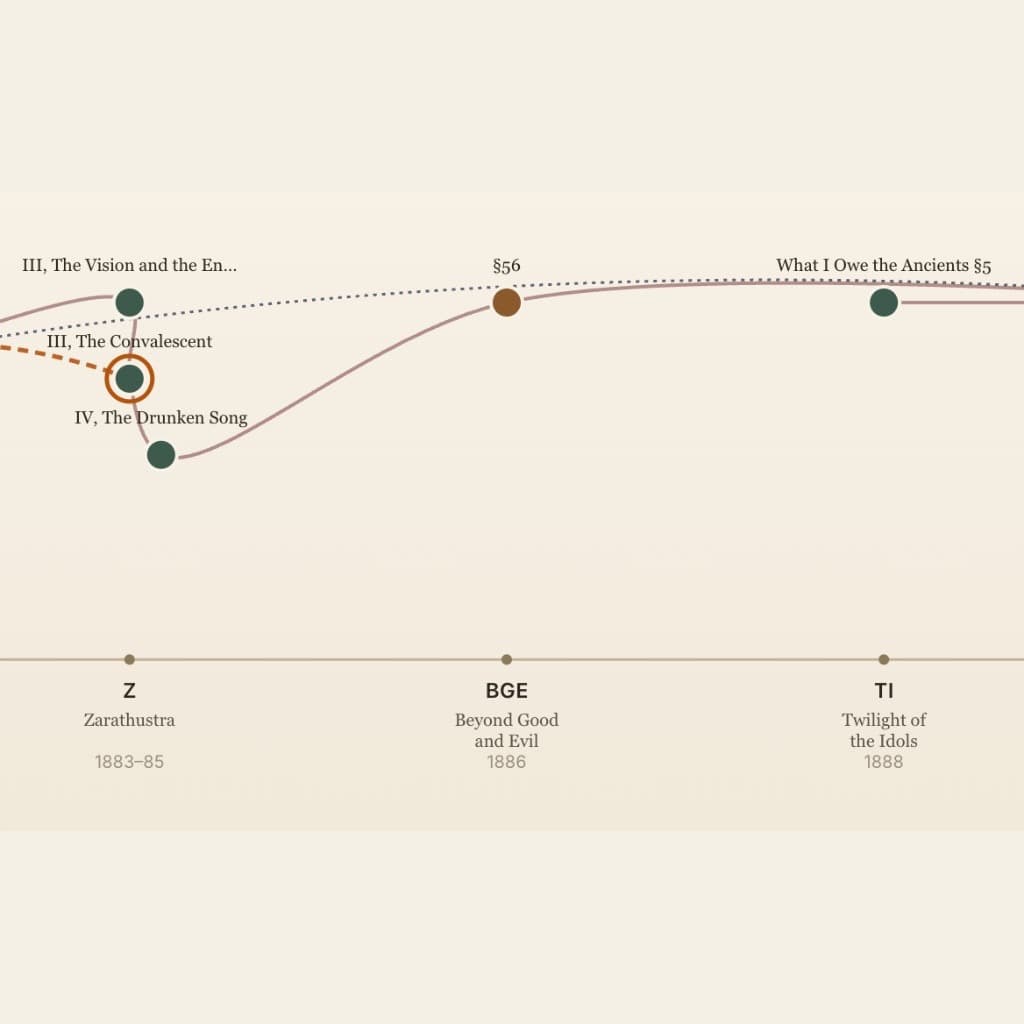
Twelve concept trajectories through the published corpus — eternal recurrence, will to power, the death of God, and more — each edge citing a section.
Open exhibit →